In short: Santa Cruz is the most visited island in the Galápagos and the easiest base for a land-based trip. Its town, Puerto Ayora, is about an hour from Baltra airport. The highlands have wild giant tortoises and lava tunnels, and Tortuga Bay is one of the few beaches you can walk to without a guide.
This page is a general guide to Santa Cruz island. It is not the website of any hotel or lodge, and it does not take bookings. Facts are linked to their sources; check prices and opening times locally because they change.
Getting to Puerto Ayora
Most visitors to Santa Cruz fly into Seymour Airport on the small island of Baltra, just north of Santa Cruz. From the airport, a short free bus runs to the Itabaca Channel, a ferry crosses to Santa Cruz in about 10 minutes, and a bus or taxi then crosses the island to Puerto Ayora. Oyster’s guide puts the whole journey at about an hour (Oyster). Before you fly, buy the US$20 Transit Control Card online and carry US$200 in cash for the national park fee, which foreign adults pay on arrival (Catch a Flight).
Puerto Ayora
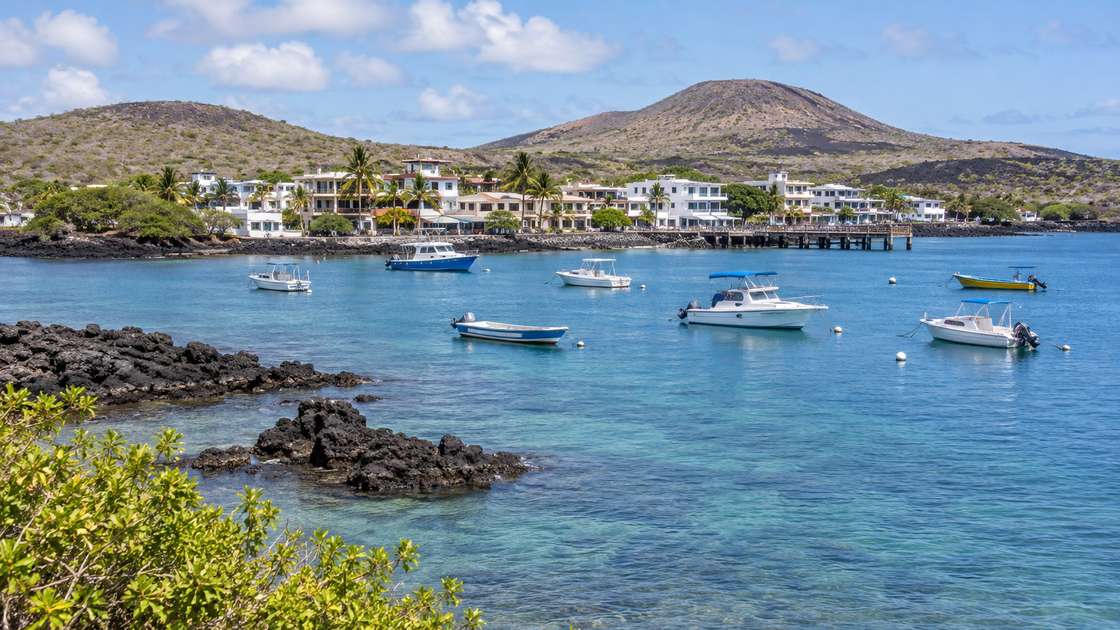
Puerto Ayora, on Academy Bay, is the largest town in the Galápagos. Charles Darwin Avenue runs along the waterfront, with restaurants, dive shops, tour agencies and the fish market, where sea lions and pelicans wait for scraps. Sea lions also sleep on benches and boats around the harbour. Hotels range from simple guesthouses to waterfront lodges, and many are within walking distance of the main street.
Charles Darwin Research Station
The Charles Darwin Research Station, at the eastern end of town, was founded in 1964. It works with the national park on research and conservation, and its visitor trail explains the breeding of giant tortoises and land iguanas.
Tortuga Bay
A paved trail of about 2.5 km leads from the edge of Puerto Ayora to Tortuga Bay. Celebrity Cruises’ guide says the walk takes about an hour and is one of the few in the Galápagos you can do without a guide; you sign in at the start (Celebrity Cruises). The main beach, Playa Brava, is a long sweep of white sand with marine iguanas and Sally Lightfoot crabs, but its currents make it unsafe for swimming. At the far end, the sheltered cove of Playa Mansa is fringed with mangroves and calm enough for swimming and kayaking.
The highlands
The road from Puerto Ayora to Baltra climbs through farmland into the moist highlands, which are cooler and often misty from June to November.
- El Chato and Rancho Primicias: private reserves where wild giant tortoises graze in pastures and ponds. El Chato is about 20 to 30 minutes from town by taxi, and its entry fee covered a guide in 2025 and 2026 (Galápagos Dana Tours).
- Lava tunnels: tubes left when the surface of a lava flow cooled and the molten rock inside drained away. Several on the highland ranches are lit and tall enough to walk through.
- Los Gemelos: two large pit craters beside the road, surrounded by Scalesia forest, good for Darwin’s finches and vermilion flycatchers.
A half-day by taxi or on a guided tour usually covers all three. Bring a rain layer and closed shoes; boots are often lent at the reserves.
Las Grietas and the bay
Las Grietas is a narrow crevice in the lava filled with a mix of fresh water and seawater, reached by a short water taxi ride across Academy Bay and a walk past salt flats. It is popular for swimming and snorkelling in clear water. On the way you pass Playa de los Alemanes, a small beach on the bay.
Day trips from Santa Cruz
Santa Cruz is the hub for day boats to nearby islands. Popular trips include North Seymour (frigatebirds and blue-footed boobies), Bartolomé (the pinnacle rock and volcanic views), Plaza Sur (land iguanas and cactus) and Santa Fe. Day boats must use licensed guides and fixed itineraries, so book through a registered operator. Public speedboats also connect Santa Cruz with Isabela and San Cristóbal, each about two hours away.
Where to stay
Most accommodation is in Puerto Ayora. Waterfront hotels on the bay offer sea views and are often visited by sea lions; guesthouses in town are cheaper and close to restaurants. A few eco-lodges sit in the highlands among the farms. Our guide to bed and breakfasts and hotels explains the trade-offs. This site does not recommend or book any specific hotel.
Practical tips
- Carry US dollars in cash; Ecuador uses the US dollar, and cards are not accepted everywhere.
- Internet is slower than on the mainland.
- Use reef-safe sunscreen and a hat; the equatorial sun is strong even on cloudy days.
- Keep about two metres from wildlife, including the sea lions on the waterfront.
Common questions
How far is Puerto Ayora from the airport?
About an hour from Baltra airport by bus, ferry across the Itabaca Channel and road across the island.
Can you see giant tortoises on Santa Cruz without a cruise?
Yes. Wild tortoises live in the highlands, and reserves such as El Chato and Rancho Primicias are a short taxi ride from Puerto Ayora.
Can you swim at Tortuga Bay?
Not on the main beach, which has strong currents. The sheltered cove at Playa Mansa, at the end of the beach, is suitable for swimming.